
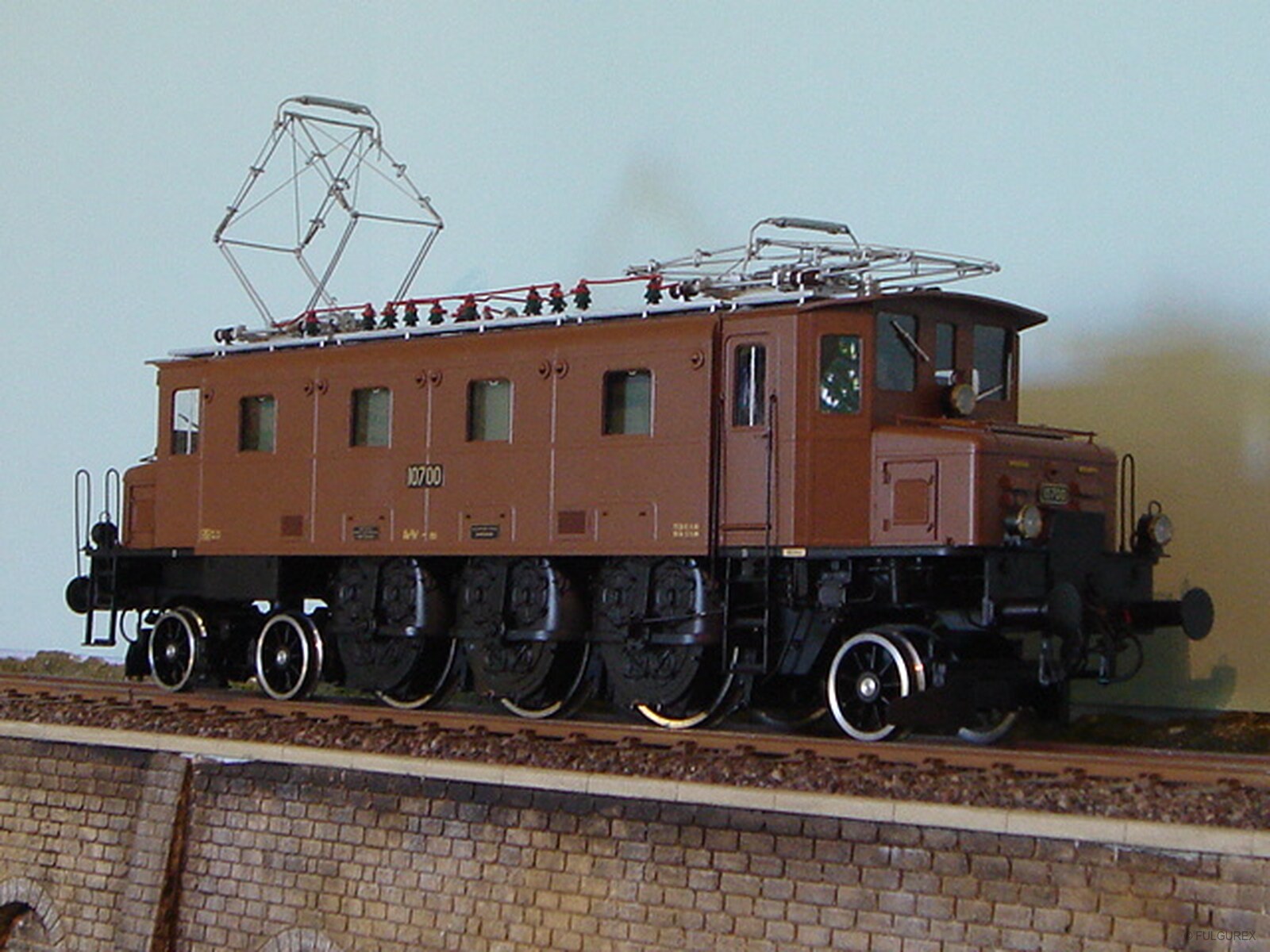
Ref. 1251 — Ae 3/6 I — SBB/CFF/FFS — No. 10700
Ae 3/6 I
Switzerland — Scale 1 (1:32)
The Ae 3/6 I was ordered in several stages between 1920 and 1929. Several companies, including BBC, MFO and SAAS, were involved in the electrical equipment. The very long production period allowed improvements to be introduced along the way, and the power of these machines rose to 1,600 kW. From 1935 the maximum speed of part of the series (Nos. 10637 to 10714) was raised from 90 to 110 km/h; the older units, Nos. 10601 to 10636, stayed at 100 km/h. In 1965 some of these locomotives underwent a modernization program: an anti-slip brake was fitted (making it possible to do without some of the sand pipes), the rod buffers were replaced by sleeve buffers on rubber springs, and various electrical adaptations were made.
Read the full story ↓| Company | Running number | Livery | Ref. |
|---|---|---|---|
| SBB/CFF/FFS | 10700 | brown | 1251 |
| SBB/CFF/FFS | 10605 | green | 1251/1 |
| SBB/CFF/FFS | 10664 | green | 1251/2 |
| SBB/CFF/FFS | 10696 | green | 1251/3 |
| SBB/CFF/FFS | 10708 | green | 1251/4 |
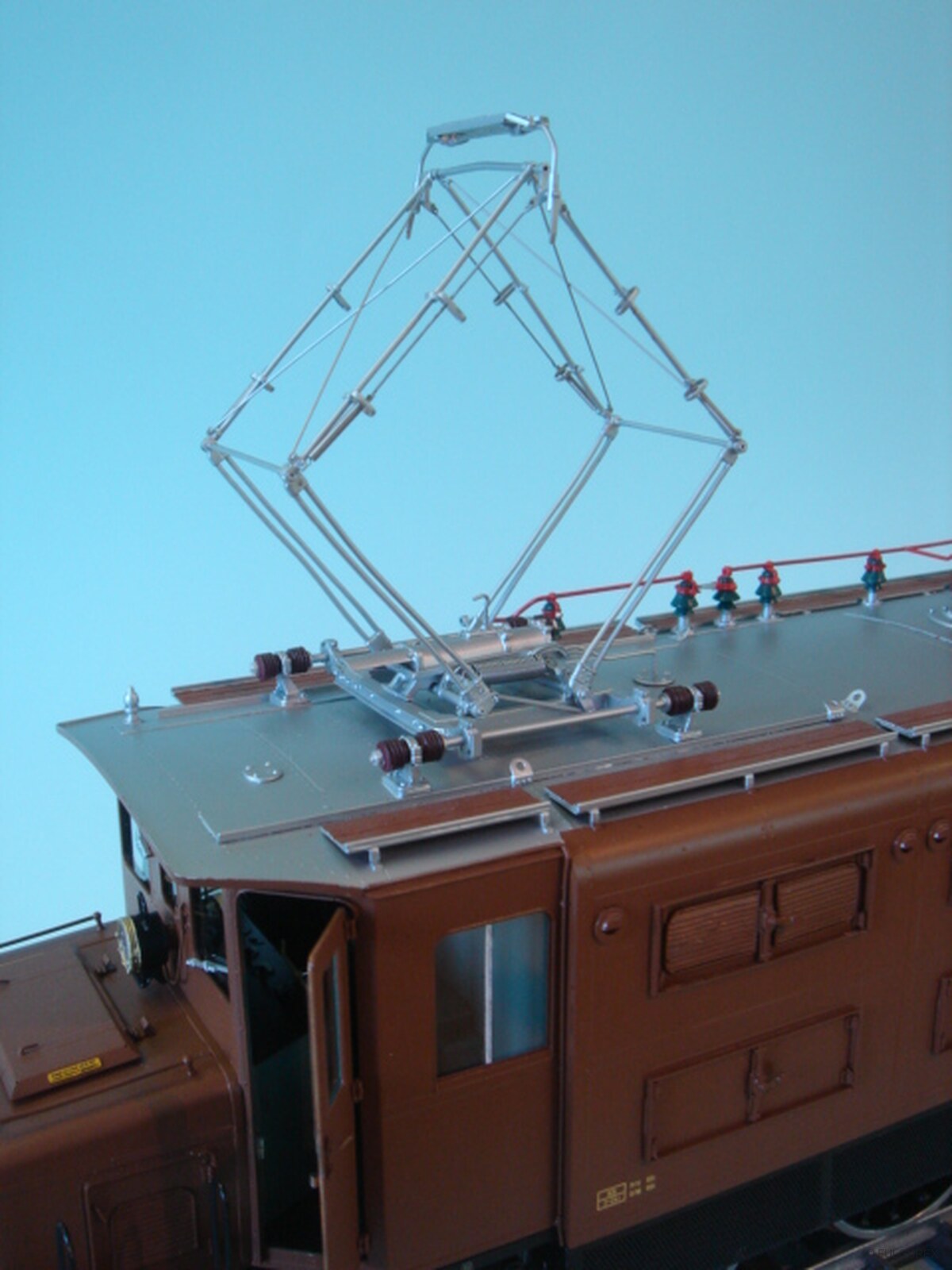
The Ae 3/6 I was ordered in several stages between 1920 and 1929. Several companies, including BBC, MFO and SAAS, were involved in the electrical equipment. The very long production period allowed improvements to be introduced along the way, and the power of these machines rose to 1,600 kW. From 1935 the maximum speed of part of the series (Nos. 10637 to 10714) was raised from 90 to 110 km/h; the older units, Nos. 10601 to 10636, stayed at 100 km/h. In 1965 some of these locomotives underwent a modernization program: an anti-slip brake was fitted (making it possible to do without some of the sand pipes), the rod buffers were replaced by sleeve buffers on rubber springs, and various electrical adaptations were made.
Thanks to careful, innovative and durable construction, and in particular to the Buchli drive, these machines far outlived their successors, the rod-driven Ae 3/6 II and Ae 3/6 III. The last one was withdrawn from service in 1994. Two locomotives of this type have been preserved as historic locomotives: nos. 10664 and 10700.