
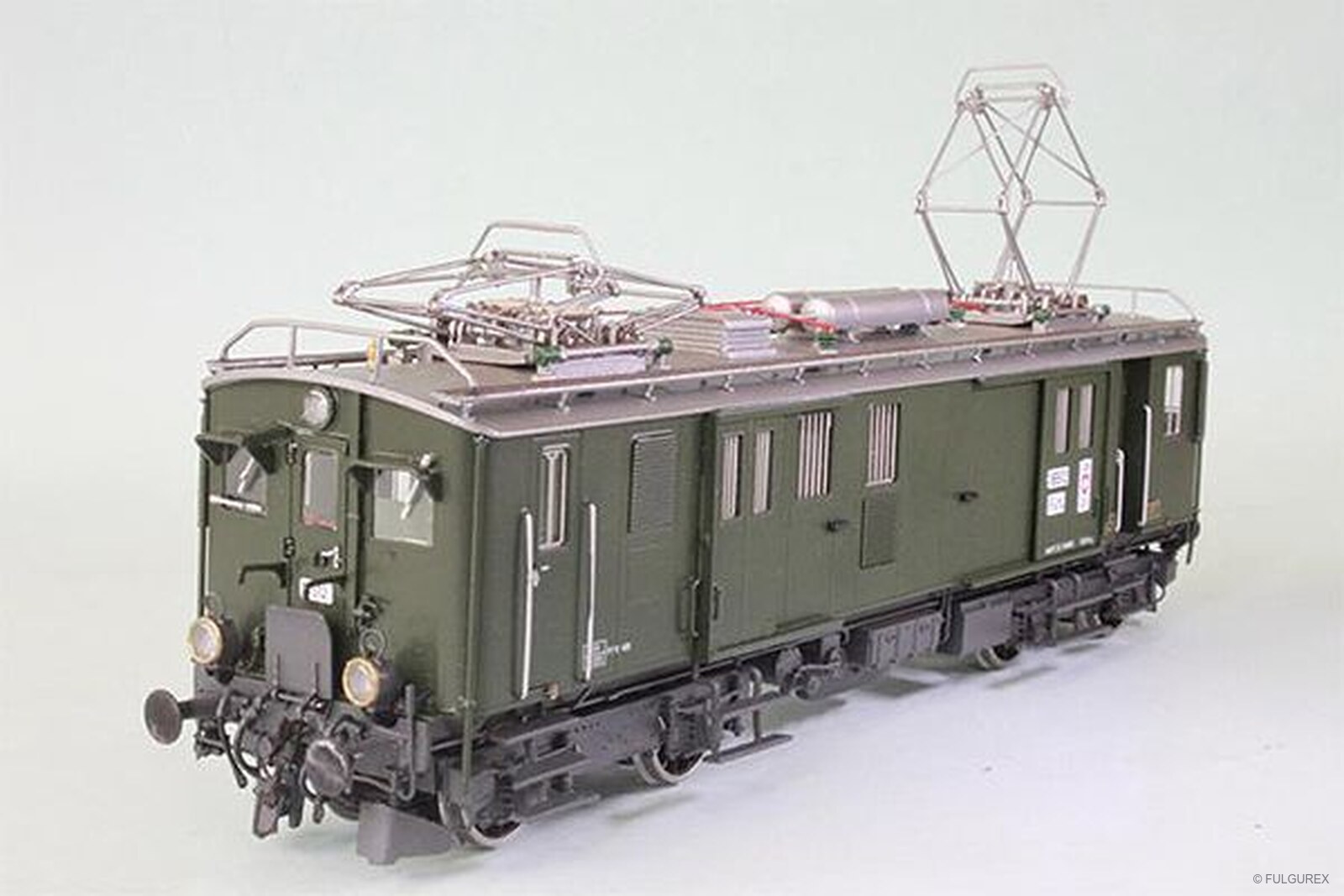
Ref. 2268 — Fe 4/4 / De 4/4 — SBB/CFF/FFS — No. 18512
Fe 4/4 / De 4/4
Switzerland — Scale H0 (1:87)
In the 1920s, regional traffic called for new motive power. In 1927 and 1928, 24 electric baggage railcars of type Fe 4/4 ("F" for baggage car), numbered 18501 to 18524, were ordered; from 1963 they carried the designation De 4/4. The body was initially of wooden construction, and the vehicles carried baggage and mail.
Read the full story ↓| Company | Type | Running number | Livery | Ref. |
|---|---|---|---|---|
| SBB/CFF/FFS | Fe 4/4 | 18512 | green | 2268 |
| SBB/CFF/FFS | Fe 4/4 | 813 | green | 2268/1 |
| SBB/CFF/FFS | De 4/4 | 1679 | green | 2268/2 |
| SBB/CFF/FFS | Fe 4/4 | 18517 | blue & white | 2268/3 |
| SBB/CFF/FFS | Fe 4/4 | 18518 | blue & white | 2268/3a |
| SBB/CFF/FFS | Fe 4/4 | 804 | reddish brown | 2268/4 |
| SBB/CFF/FFS | De 4/4 | 1662 | reddish brown | 2268/5 |
| SBB/CFF/FFS | Fe 4/4 | 831 | green | 2268/6 |
In the 1920s, regional traffic called for new motive power. In 1927 and 1928, 24 electric baggage railcars of type Fe 4/4 ("F" for baggage car), numbered 18501 to 18524, were ordered; from 1963 they carried the designation De 4/4. The body was initially of wooden construction, and the vehicles carried baggage and mail.
From 1929, these railcars worked shuttle services in the Zurich area and later throughout Switzerland. One of the best-known formations was the "Arbeiterpullmann" in the blue-and-white "Zürcher-Anstrich" livery. One vehicle (Fe 4/4 no. 813, later De 4/4 no. 1673) also ran on the BT (Bodensee–Toggenburg). In the Seetal region the vehicles were given 800-series numbers and a red-brown livery with an additional window on the left of the cab. Renumbered and rebuilt several times, they lost their second pantograph, among other changes. The green De 4/4 no. 1679 is maintained as a heritage vehicle; a "Zürcher" version is on display at the Swiss Museum of Transport in Lucerne.