
Why choose a brass model rather than a plastic one?
When comparing two miniature locomotives of the same scale – one made of injection-molded plastic, the other of hand-crafted brass – the difference is not always immediately apparent. Yet it gradually reveals itself: to the touch, in the fineness of the details, in the way the model is constructed, and in the test of time it is designed to withstand. This is what truly sets the two worlds apart, and why brass has remained, for several decades, the material of choice for the most discerning collectors.
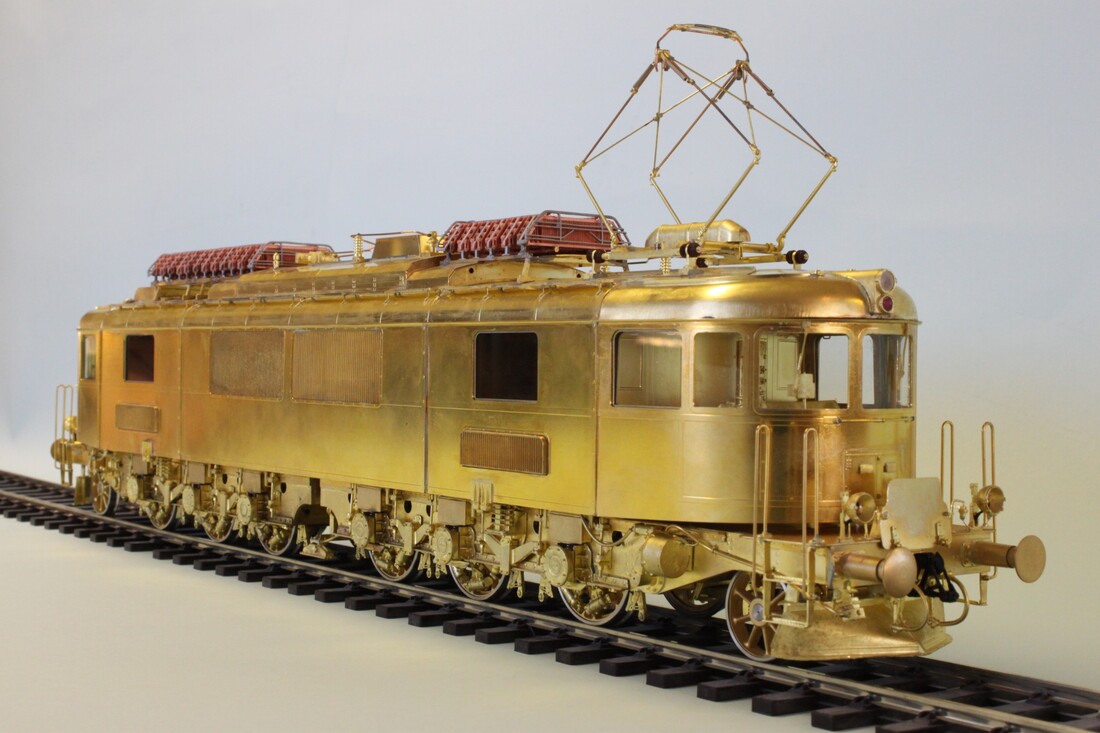
A question of method before it is a question of material
A plastic model is created from a mold. Once the mold has been designed — a considerable investment, recouped over tens of thousands of units — each part comes out identical to the last, in a matter of seconds. This is a high-volume manufacturing industry, and it has its advantages: affordability, consistency and reasonable prices.
A brass model is created from a sheet of metal, which is cut, bent and soldered piece by piece by a craftsman. This method of assembly, which is much more time-consuming and labor-intensive, lends itself naturally to small-batch production rather than industrial-scale manufacturing. Rarity is not a marketing ploy: it stems directly from the manufacturing method itself.
The detail that a mold cannot provide
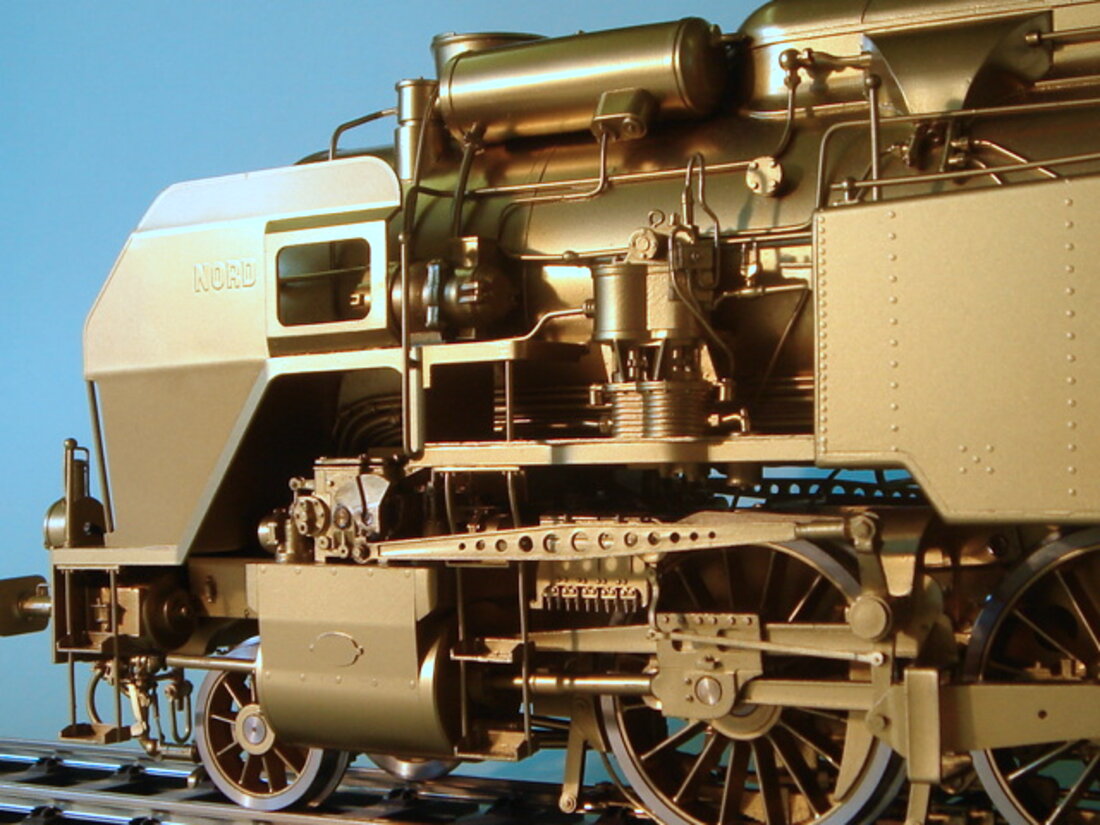
Plastic injection molding imposes certain unavoidable physical constraints: a molded part must be able to be removed from its mold without breaking, which limits the use of undercuts, thin protruding features and complex overlapping sections. Brass does not have this limitation. Pipework can be shaped separately and fitted on; a railing can be made up of distinct components; a smokebox door can be designed as a fully articulated part rather than simply a molded relief.
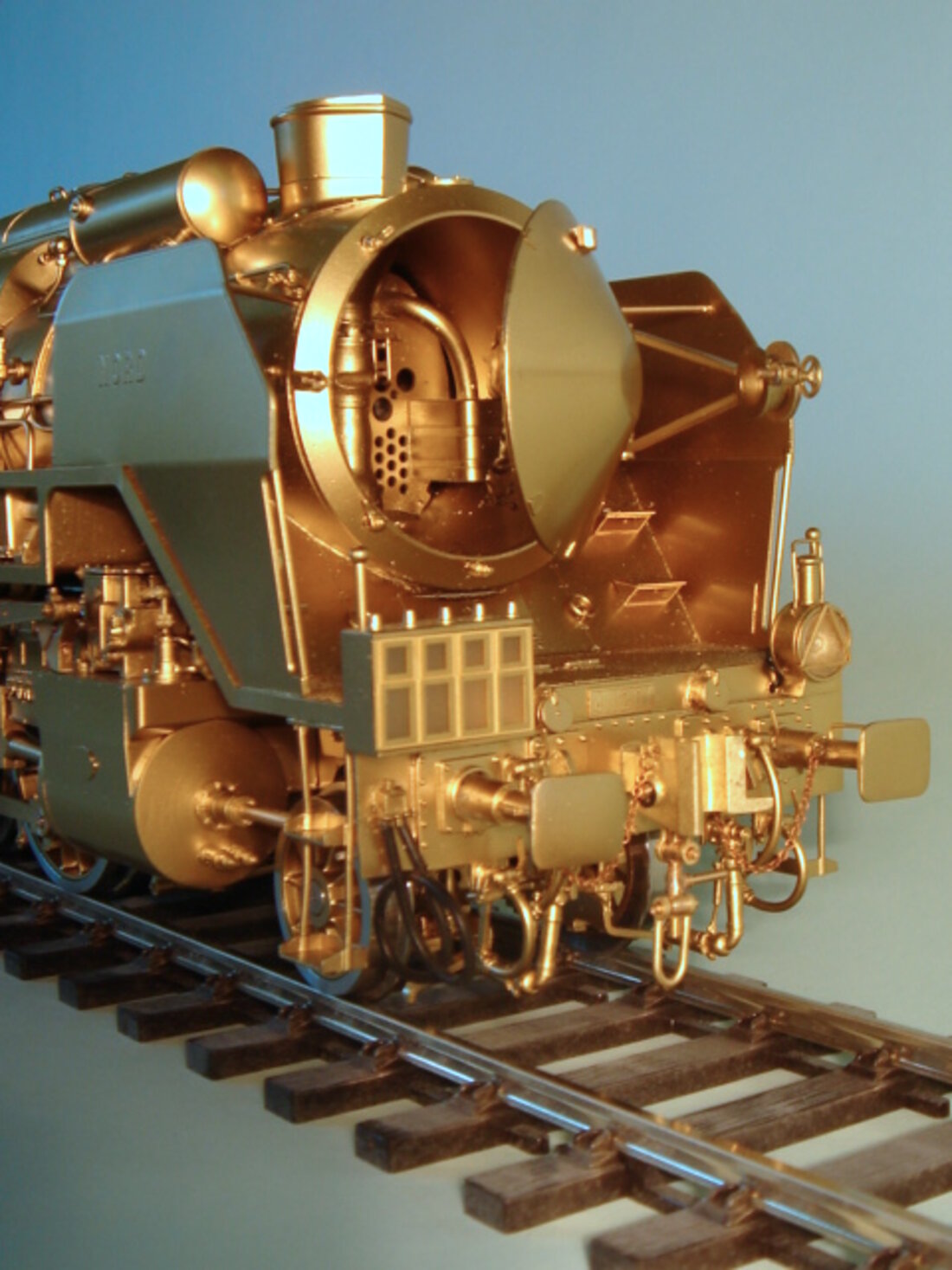
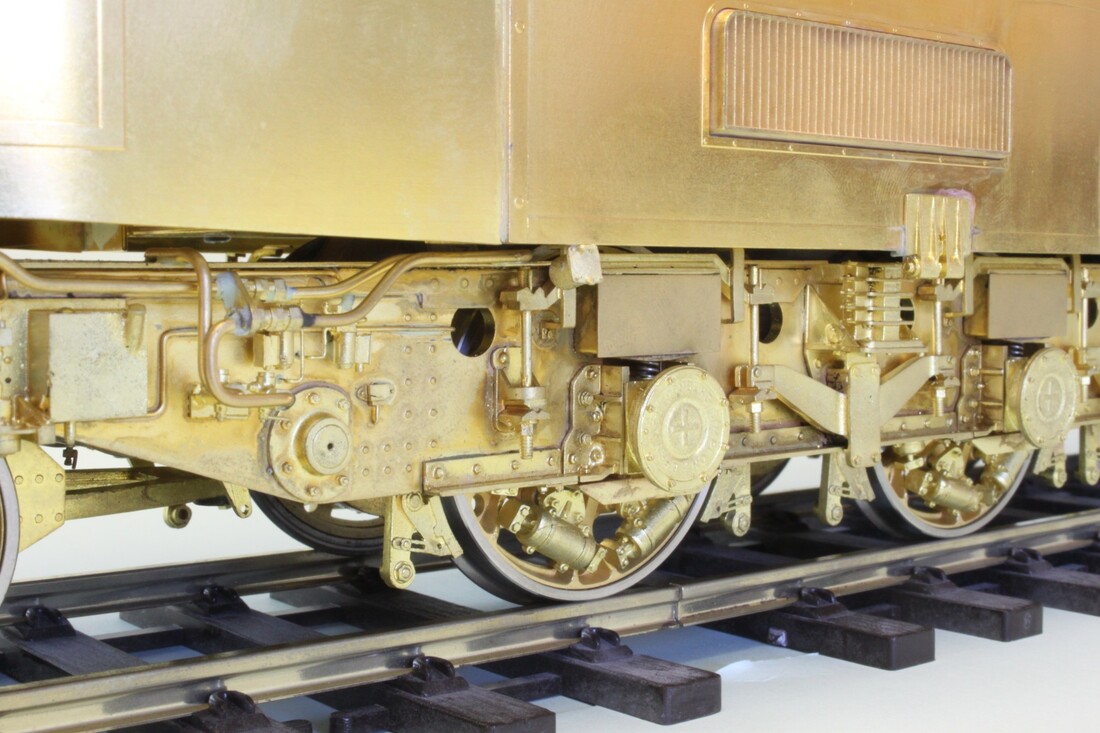
It is this freedom that makes it possible to reproduce a real prototype, not through printing, but in its very construction — piece by piece, just as the original locomotive itself was assembled in the workshop.
Etching and casting: techniques that allow an exceptional level of fine detail
Two craft techniques account for much of this lead in fine detail.
Chemical etching (or photoetching) involves coating a thin brass plate with a photosensitive varnish, then exposing it through a highly precise artwork before immersing it in an acid bath which dissolves only the unprotected areas. The process can cut patterns of a fineness that mechanical cutting or injection molding cannot match, from sheet metal just a few tenths of a millimeter thick. Examples are openwork ventilation grilles, embossed manufacturer’s plates, openwork railings and roof grilles. If made of plastic, these details would either be impossible to mold or would only be suggested on the surface, rather than actually present in three dimensions.
One particular advantage of chemical etching is that it does not exert any direct mechanical force on the sheet metal. It therefore allows very fine, openwork patterns to be produced while maintaining a high degree of flatness in the workpiece. The final precision therefore depends, in particular, on the quality of the design, the thickness of the metal and the etching parameters.
Lost-wax casting, on the other hand, is used for parts with complex shapes that cannot be produced by sheet metal forming: cylinders, bogies, smokeboxes and boiler fittings. The principle, which dates back several millennia but remains unrivaled in terms of the precision it allows, involves casting molten metal — brass, bronze or nickel silver — into a mold made from a wax model, which is itself destroyed by the heat during casting. This technique makes it possible, in particular, to reproduce complex shapes and three-dimensional details, including certain geometries featuring undercuts that are difficult to achieve with a conventional industrial mold.
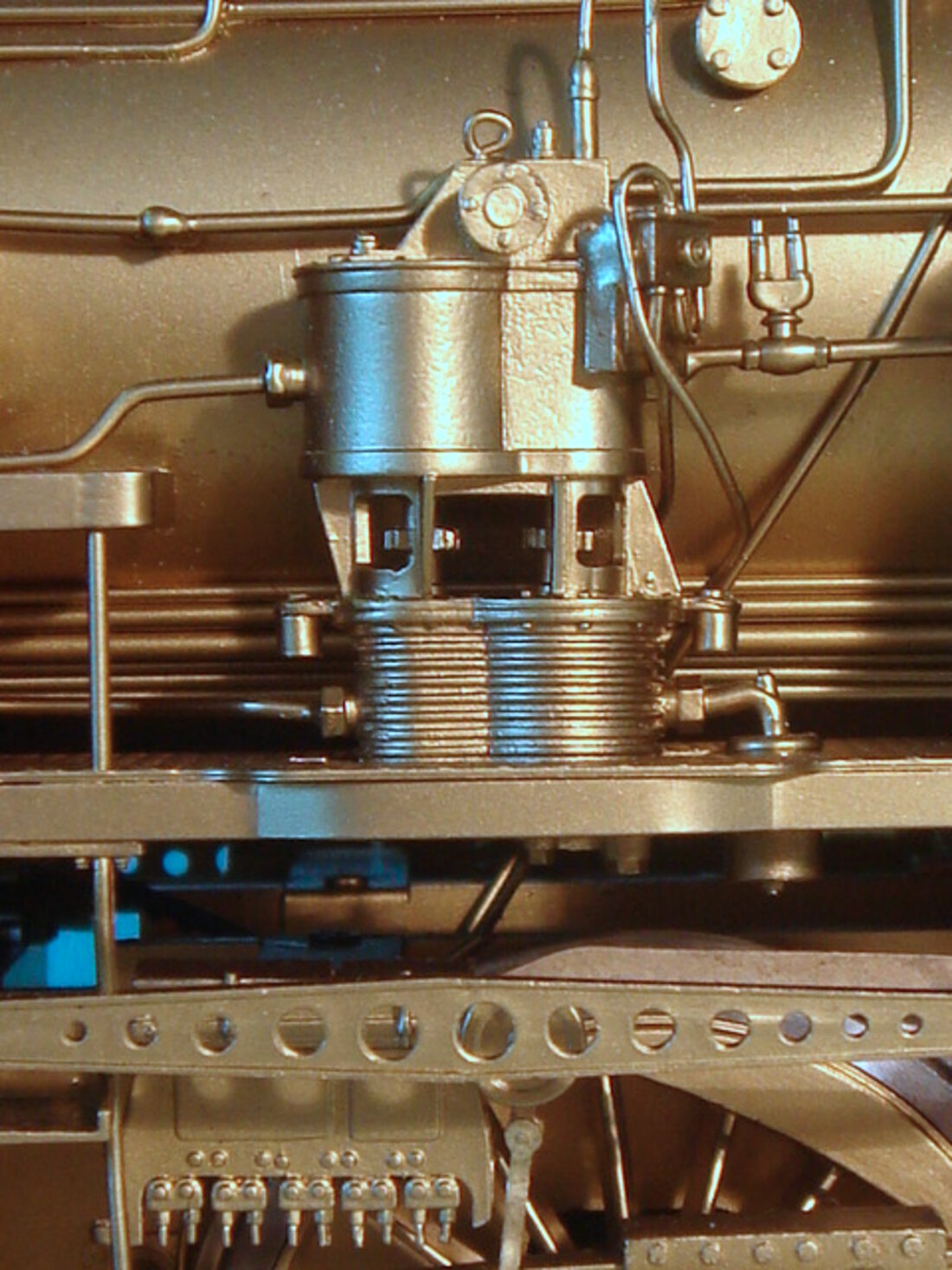
It is the combination of these two techniques — etched sheet metal for flat, delicate details, and casting for three-dimensional forms — that enables a brass model to achieve a particularly high level of detail. The choice of process therefore depends on the shape to be reproduced: each technique offers its own possibilities.
The weight of an object with a history
You can recognize a brass model even with your eyes closed: its density is a world away from that of a plastic part. This weight is no trivial detail — it changes the way the object rolls, the way it sits on the track, and the way it is handled. The weight in your hand also contributes to how you perceive the object: the model immediately becomes a collector’s item to be handled with care, rather than simply a visual representation of the prototype.
An object that outlasts time rather than keeping pace with it
Different plastics do not all age in the same way: depending on their composition, formulation and exposure to light, heat or mechanical stress, some may yellow, warp or become more brittle over time. Brass, on the other hand, is not affected by light or the passage of time in the same way — at most, it develops a patina, just as an antique bronze or copper object would. A brass model that has been properly preserved can therefore last for several generations and, where necessary, be restored. Indeed, older models continue to circulate among collectors several decades after they were made.
Value that is built up, not just a price
For many collectors, a brass model is more than just a hobby purchase: it becomes a piece of heritage. Produced in very small numbers, faithful to a specific prototype, and often accompanied by documented historical research, these items retain their value over time — their appeal potentially enhanced by their rarity, condition, provenance, documentation or collector demand. This is never a guarantee, but it represents a fundamental difference from an item produced to last just one sales season.
Paint: revealing the metal rather than concealing it
Painting a brass model is nothing like painting a plastic part — and this is yet another stage where craftsmanship comes into its own, for a reason that has to do with the very physical nature of the two materials.
Surface preparation is essential in both cases. On brass, degreasing, cleaning and applying a suitable primer helps to prepare the surface and ensures the paint adheres effectively over the long term. Plastic also requires preparation tailored to its nature and the type of paint used. The aim in both cases is to achieve a thin, even and durable coat of paint, capable of preserving the precision of the details created beforehand.
Next comes the application, often by spraying (airbrush or spray gun) on pieces of this quality. This method allows an extremely fine, even layer to be applied, with the intensity of the color adjusted to the surface relief. It also highlights the engraving and casting work done beforehand, rather than obscuring it: a rivet, a rib or an engraved plate must remain visible beneath the color, not be lost in it. For historical liveries, colors are sourced from available references — color charts, period documents, photographs and archives — in order to reproduce the colors of the actual prototype as faithfully as possible.
Two worlds, not a hierarchy
This is not to say that plastic is a second-best option. Considerable progress has been made in modern injection-molding techniques, and many model-makers successfully combine the two materials in their layouts, depending on the intended use. Plastic can meet the need for affordability, variety or intensive use of the layout. Brass is better suited to those seeking handcrafted construction, fine detail and a component produced in small batches. Choosing brass is not a decision based on track performance — it is a choice driven by fidelity, rarity and passing it on. It is a choice that places the model within a collecting approach, based on the idea that a well-made object can accompany a passion for many years and, one day, be passed on in turn.
Fulgurex: brass as a collector’s choice
At Fulgurex, the choice of brass is not merely a matter of selecting a material. It stems from a particular approach to model-making: starting with a real prototype, studying it, reproducing its shapes and details, and then bringing the model to life by assembling numerous parts.
This method requires time, skill and careful monitoring of each stage. It naturally leads to small-batch production, where each model is conceived as a collector’s item rather than a mass-produced item — see our craftsmanship.
Brass offers a different way of reproducing. Discover the Fulgurex models currently available and explore the prototypes that inspired them.