
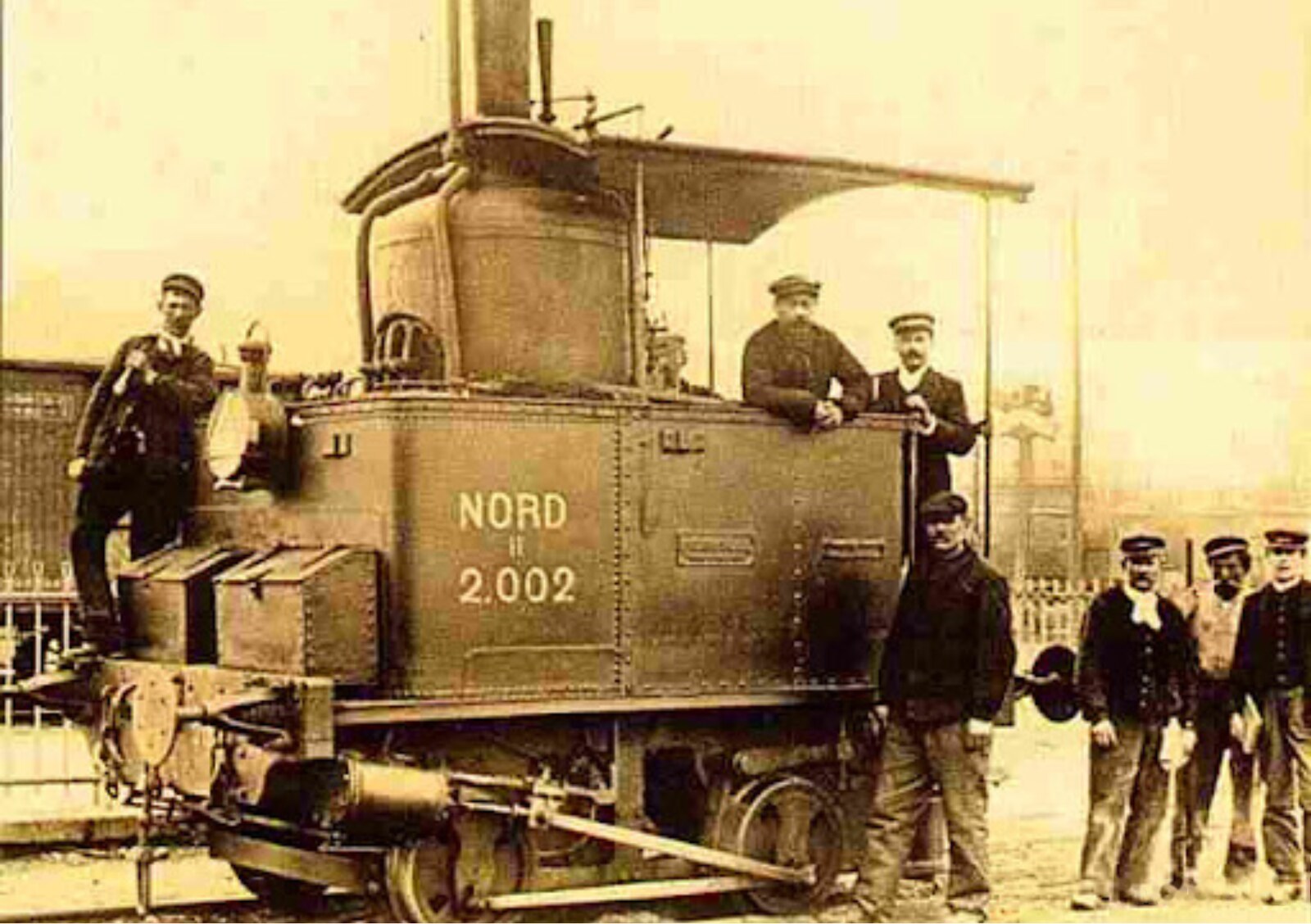
Ref. 2287 — 020 T "Ink Bottle" — NORD — No. 2.002
Photo D.R.020 T "Ink Bottle"
France / Belgium / Luxembourg — Scale H0 (1:87) — Limited edition of 250 units
Vertical boiler locomotives represented the archetypal type of small shunting engine. The distinctive shape of their boiler quickly earned them the nickname "ink bottle", as they resembled the bottles once used by schoolteachers to fill pupils' inkwells. The Société Anonyme John Cockerill established itself as the leading manufacturer of this type of locomotive, with nearly 900 units produced. The concept also attracted other major builders such as Fives-Lille, Cail and Franco-Belge, each developing their own versions.
Read the full story ↓| Company | Running number | Livery | Manufacturer | Ref. |
|---|---|---|---|---|
| NORD | 2.002 | black | Fives-Lille, La Chapelle | 2287 |
| NORD | 2.007 | black | Franco-Belge, Calais | 2287/1 |
| PLM | 7002 | black | Fives-Lille | 2287/2 |
| PLM | 7005 | black | Porter | 2287/3 |
| Ouest | 020 M2 | green | Corpet-Louvet | 2287/4 |
| SNCF | 2-020 TA n° 3 | black | Fives-Lille | 2287/5 |
| SNCF | 2-020 TA n° 5 | black | Porter | 2287/6 |
| TRAIN 1900 | 503 | red | Cockerill | 2287/7 |
| AJECTA | 020 bis « Suzanne » | green & black | Cockerill | 2287/8 |
| B.V.S | green | Cockerill | 2287/9 |
Vertical boiler locomotives represented the archetypal type of small shunting engine. The distinctive shape of their boiler quickly earned them the nickname "ink bottle", as they resembled the bottles once used by schoolteachers to fill pupils' inkwells. The Société Anonyme John Cockerill established itself as the leading manufacturer of this type of locomotive, with nearly 900 units produced. The concept also attracted other major builders such as Fives-Lille, Cail and Franco-Belge, each developing their own versions.
Cail presented this locomotive at the Milan Exhibition in 1907, where it attracted attention due to its extremely compact dimensions. With an overall length of only 4.46 m, it could easily be turned on small-diameter turntables commonly found in factories, quarries, sugar refineries and even port facilities. The Compagnie du Nord adopted this locomotive, often referred to as the "micro-locomotive of the company", in a series of 35 engines numbered 2.001 to 2.035, divided into three sub-series.
These machines did not occupy a leading role on the railway network and were far removed from the prestigious duties of express trains. However, shunting operations are essential: without shunting there would be no trains. The quick-steaming boiler proved to be a particularly suitable solution: ready for operation in less than an hour, and sometimes within just a few minutes, the water was heated very quickly. To ensure immediate availability, pressure therefore had to be maintained at all times, with the fire kept alight day and night.